Community college can save you $14,540 in tuition. But one misaligned course can silently push your transfer date back a full year, and most students never see it coming.
Transferring from community college to a four-year university is one of the smartest financial moves a student can make. The common assumption is: "If I just meet with my counselor and check ASSIST occasionally, I'll figure out the right classes to take and transfer on time without any major issues." According to the American Association of Community Colleges, the average annual tuition at a public two-year college runs about $3,990, compared to $11,260 at a public four-year university.
Complete your first two years at a community college and you pocket roughly $14,540 in tuition savings before you ever set foot on your transfer campus. What catches most students off guard is not the cost or the coursework; it is the hidden structural traps buried inside a process that looks far simpler than it actually is. Tools like Transfermatic exist precisely because the gap between "planning to transfer" and "transferring on schedule" is wider than any counselor appointment or articulation website will show you.
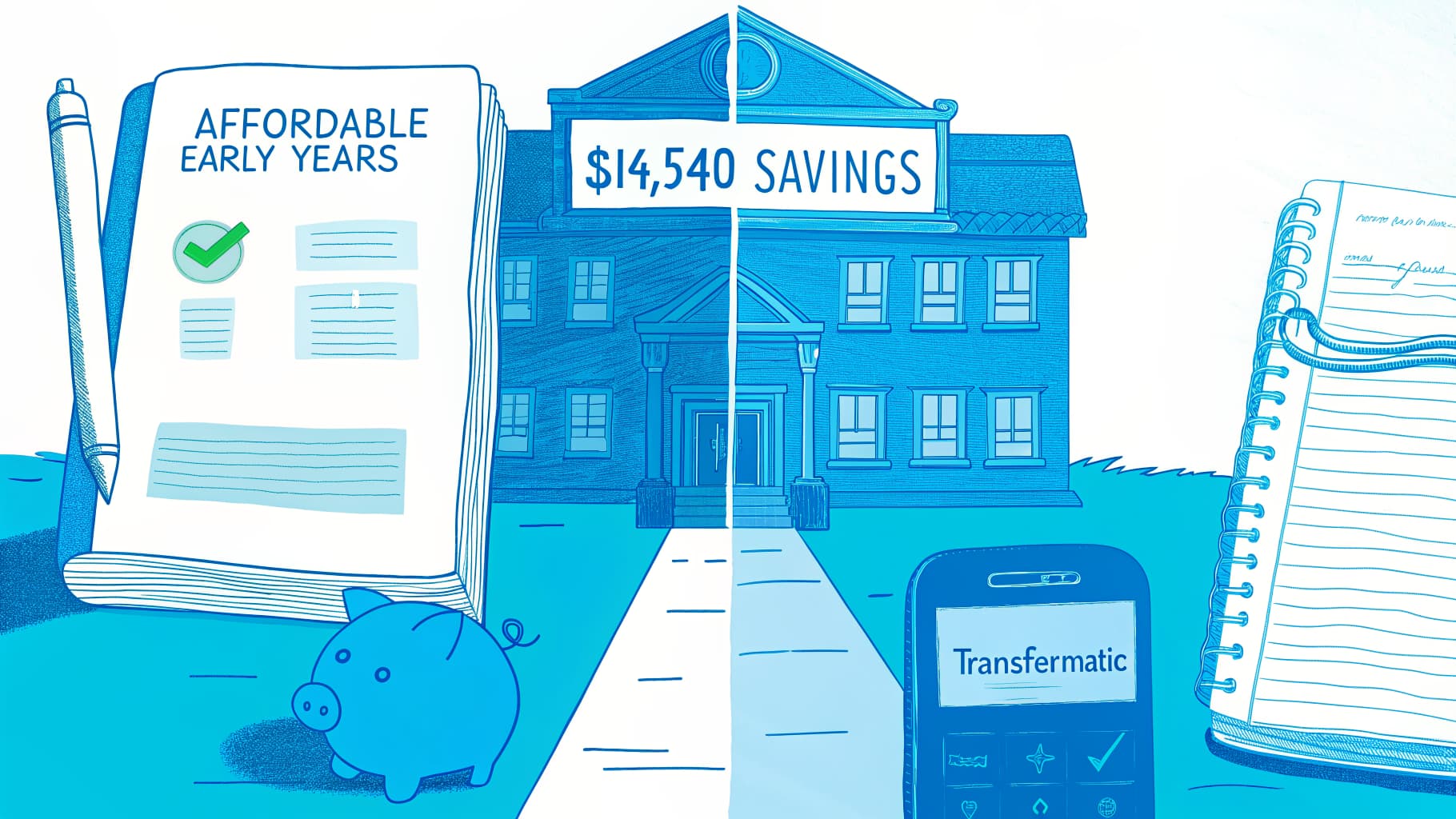
Entering as a junior when transferring from college to university is not automatic. It depends on completing roughly 60 transferable units that satisfy both general education requirements and major-specific prerequisites at your target school. Miss one required course and the junior standing you planned for evaporates, along with the savings attached to it.
The vast majority of transfer students who intend to transfer within two years do not make it on schedule, according to national research on transfer outcomes. The reason is almost never a low GPA. It is a single misaligned class, a prerequisite no one flagged, or a general education pattern built for the wrong target school. That one gap quietly pushes a transfer date back a full year, adding tuition costs and delaying real earnings with no warning until registration for the final semester arrives.
$14,540 Tuition savings from starting at community college
Key takeaways
- Community college transfers can cut undergraduate costs by tens of thousands of dollars, but only if the right courses are taken in the right order from semester one.
- One misaligned class taken early doesn't cost you one class; it can push your transfer date back a full year before you ever see it coming.
- ASSIST.org confirms whether a course transfers; it does not tell you whether that course satisfies the specific requirement standing between you and on-time admission to your major.
- Articulation agreements are time-sensitive and condition-heavy; treating them as background paperwork is one of the most common reasons students lose credit they thought was locked in.
- GPA matters, but competitive universities reject transfer applicants with strong transcripts built around the wrong courses just as fast as they reject low performers.
- The two-year transfer timeline is achievable, but only for students who identify their target school and major in semester one and build a verified course sequence around both.
- Transfermatic closes the gap by assembling all of that into a personalized, semester-by-semester transfer roadmap tied to your exact major and target school, so no class goes to waste and no deadline catches you off guard.
What Is the Typical Timeline for Transferring from Community College to University?
Most students assume two years is the default and leave it at that, but whether that timeline actually holds depends almost entirely on decisions made in the first semester. The difference between transferring on time and adding an extra year usually comes down to whether every course you take has a confirmed purpose from the start, covering both general education and major prerequisites, not just one or the other. Here is what that process looks like when it works, and how to set yourself up to follow it.

What the Two-Year Transfer Timeline Actually Looks Like When It Works
The two-year transfer timeline works when a student identifies their target university and major in their very first semester, builds a complete semester-by-semester course sequence from day one, and takes only courses that are verified to count toward both general education and major-specific requirements. That last part is the one most students miss. General education and major prerequisites are two separate checklists, and both have to be completed in the right order before a transfer application can be competitive.
When the timeline works, every course a student takes has a confirmed purpose. There is no guessing, no "I think this one counts," and no discovering a gap at the transfer application stage. The student graduates from community college with exactly the units they need, applies in the fall of their second year, and enrolls as a junior the following fall.
This is precisely where starting with a structured tool matters most. Transfermatic's Transfer Roadmap Planning is most beneficial when a student is in the early semesters of community college and already has a target transfer school or major in mind, exactly the window when a personalized, semester-by-semester plan can still be built without any wasted time. Within minutes of completing an initial setup, a student has a course-by-course sequence built around their specific community college, their target university, and their intended major, not a generic checklist that may or may not apply to them.
"I'm unsure how long I need to stay at community college before transferring, I was aiming for after a year, but others I've spoken to spent two or three years, and there's real confusion around the minimum viable timeline."
Why the Two-Year Transfer Timeline So Often Slips
One of the most persistent struggles transfer-intending students face is uncertainty about how long they actually need to stay at community college before they are eligible to transfer. Some students aim to leave after a single year; others end up staying two, three, or even four years, not by choice, but because no one handed them a precise, verified sequence at the start. That confusion around the minimum viable timeline is not a personal failure.
It is what happens when a student has no clear structure guiding their course selection from semester one. The common assumption is that if a student just meets with their counselor and checks ASSIST occasionally, they will figure out the right classes to take and transfer on time without any major issues. According to the CCRC's research on transfer effectiveness, only about 14% of transfer-intending community college students actually transfer to a four-year institution within two years.
The CCRC's own framing is clear: transfer outcomes are driven by institutional planning structures, not by how hard a student studies or what GPA they maintain. That finding matters because it directly contradicts the most common assumption transfer students carry, that consistent effort and a decent GPA are enough to stay on track. They are not.
A student can earn straight A's in every class and still miss the two-year window because one required course was never on their radar. The failure is structural, not personal. Transfermatic's Articulation Requirement Matching directly addresses the structural layer of this problem.
It is most beneficial when a student is deciding between multiple target universities or majors and needs to compare course equivalencies quickly, because figuring out exactly which courses at your community college will count toward your intended major at your target university is the foundational question, and getting it wrong early is what silently extends timelines by a semester or more.
14% Transfer-intending students who transfer in two years
How One Wrong Class Can Silently Push Your Transfer Date Back a Full Year
Here is the specific way it happens. A student takes a general sociology elective because a counselor mentioned it would satisfy a social science requirement. It does. But their target university's engineering program required a statistics course to satisfy that same requirement, and statistics was also a prerequisite for two upper-division courses the university expected to be completed before transfer. The student discovers this at the application stage. The statistics course is offered once per year. The transfer date moves back twelve months. One course. One year.
This scenario is not rare. It is one of the most common ways the two-year path quietly becomes a three-year path, as data on community college transfer barriers confirms. The CCRC's tracking research reinforces the same point: the institutions and systems that produce better transfer outcomes are the ones that build verified, structured planning in early, not the ones that leave students to self-navigate articulation rules mid-path. Transfermatic's plan regeneration feature exists specifically for moments when something changes, a student switches target schools, adds a second major, or discovers a prerequisite conflict.
Rather than manually re-mapping an entire sequence, the plan is rebuilt around the updated inputs. Paired with registration deadline reminders, the tool ensures that when a corrected course needs to be added to a schedule, the student actually catches the enrollment window before it closes. The difference between a two-year transfer and a three-year transfer is often not a GPA point.
It is knowing, before registration opens each semester, that the right course is in your plan and the deadline has not passed.
The difference between a two-year transfer and a three-year transfer is often not a GPA point.
How to Transfer Credits from Community College - Without Losing Any
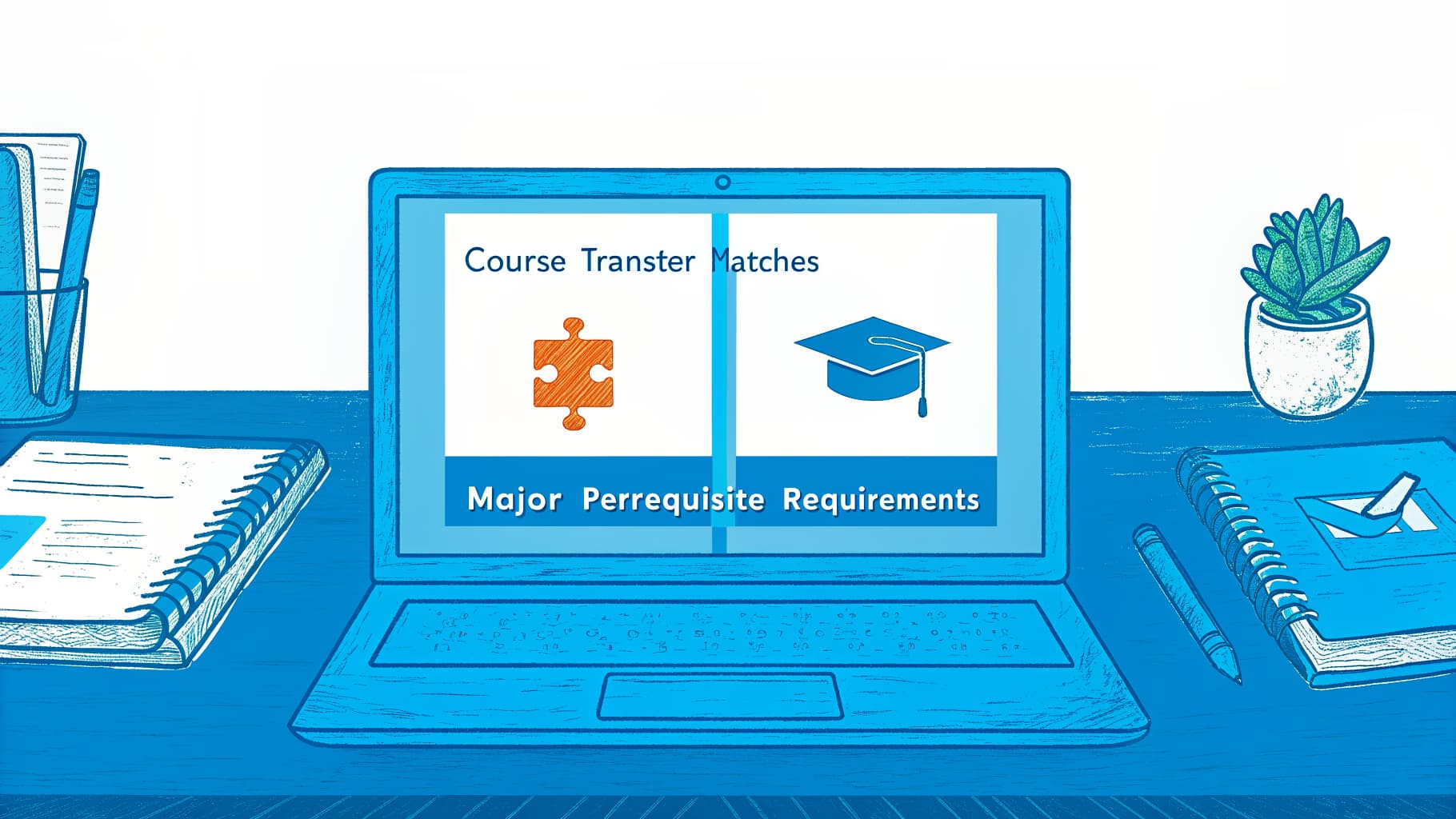
You check ASSIST.org on a Tuesday night, and it is easy to walk away feeling like the hard part is done. You found your courses, you saw the matches, you feel covered. The problem is that ASSIST confirms whether a course transfers, it does not tell you whether that course satisfies the specific requirements standing between you and on-time admission to your major.
Credit loss at transfer is almost never caused by poor grades or insufficient effort; it is caused by the fact that students must simultaneously satisfy two distinct checklists, general education requirements AND major-specific prerequisites, that vary by institution and major in ways that no single advising session or database reliably captures together. When students lack a verified, institution-specific roadmap from day one, they systematically accumulate credits that don't count, losing an average of 43% of their units and adding a year or more to their degree, a pattern so persistent that institutions like CUNY have moved to sweeping structural reform of the transfer process specifically to close it, and one well-documented in the broader community college transfer literature. This is the vacuum that students without frequent, personalized counselor access feel most acutely.
A parent trying to help their student transfer to a good school, or a student navigating articulation requirements largely on their own, rarely has the luxury of sitting down with a transfer counselor every semester to re-verify a plan. That access gap is exactly where costly planning errors compound.
ASSIST.org Tells You If a Course Transfers, Not Whether It Counts Toward Your Major
ASSIST.org is a genuinely useful tool. It covers California's community colleges and UC and CSU campuses in one searchable database, and for confirming individual course-to-course equivalencies, it is the right starting point. But course transferability and major requirement satisfaction are two different checklists, and ASSIST only shows you one of them.
A biology student confirming that BIO 101 transfers to their target UC may not realize their intended pre-med track requires a specific lab prerequisite chain that BIO 101 alone does not satisfy. The course transferred. The requirement did not.
This is where Transfermatic's Articulation Requirement Matching is most valuable: when a student is deciding between multiple target universities or majors and needs to compare course equivalencies quickly, seeing only one equivalency at a time inside ASSIST means manually repeating that lookup for every school and every major under consideration. Transfermatic surfaces those comparisons side by side so the distinction between "this course transfers" and "this course satisfies the requirement your major actually demands" stays visible throughout the decision.
How to Read ASSIST.org Without Mistaking a Puzzle Piece for the Finished Picture
Think of ASSIST as a dictionary, not a sentence. It tells you what individual words mean, but it does not write the paragraph your major requires. To use it correctly, open your target university's major requirements page alongside ASSIST simultaneously.
Match each required course in the major against its community college equivalent, in the sequence the major demands. If a prerequisite must come before another course, that order matters at the university level even if ASSIST does not flag it. The full picture only appears when you layer the major's required sequence on top of the individual equivalency matches.
For students in the early semesters of community college, the window when a Transfer Roadmap has the greatest impact, getting that layered picture right from the start prevents the semester-by-semester drift that turns a two-year plan into a three-year reality. Transfermatic builds a personalized semester-by-semester transfer plan within minutes of a student completing intake, then surfaces registration deadline reminders and plan regeneration each semester during course selection so the roadmap stays current as schedules and goals shift.
Why You Must Keep Every Syllabus from Every Community College Course
Universities regularly request syllabi when evaluating whether a transferred course satisfies a specific requirement, particularly for upper-division prerequisites or courses with no direct ASSIST match. This is not a rare edge case. Admissions and department offices use syllabi to compare learning outcomes, topics covered, and the depth at which material was taught. A student who cannot produce a syllabus for a course taken two years earlier loses the ability to make that case entirely, and no database, including ASSIST, can make it for them. Save every syllabus the moment you receive it, organized by course and semester, so that documentation exists if a department reviewer asks for it during articulation review.
What Are Articulation Agreements and How Do They Work for Transfer Students?
Articulation agreements are the closest thing to a guaranteed contract that exists in the transfer system, but most transfer students treat them like background paperwork rather than the time-sensitive, condition-heavy tools they actually are. The difference between a course that satisfies a specific requirement and one that lands as a free elective can be invisible until registration is already done, and by then the cost is a full semester you didn't plan to spend.

Articulation Agreements - The Formal Guarantee
Articulation agreements are formal, written contracts between a community college and a specific university confirming that a particular course satisfies a particular requirement at that university. They are not general assurances that "similar courses count." A course that looks identical on paper can transfer as free elective credit and silently fail to satisfy the requirement you needed it to fill, if it isn't explicitly listed in the agreement for your major at your target school.
One of the most disorienting situations transfer students face is discovering that a course failed to apply even when it appeared to be explicitly listed on the articulation agreement. Discrepancies between catalog years, major-specific versus general articulation, and receiving-school processing errors all create gaps between what the agreement says and what actually posts to a student's record. Students who consult these agreements before they register, and verify the exact major and catalog year, are protected; students who check afterward are not.
Transfermatic's Articulation Requirement Matching is designed precisely for this moment: it cross-references course equivalencies across multiple target universities and majors in one place, so a student deciding between programs can compare what each school will actually accept before committing to a course. That capability is most valuable when a student is weighing multiple target universities or majors and needs to resolve equivalency questions quickly, not after registration closes.
UC Transfer Admission Guarantee (TAG)
The UC Transfer Admission Guarantee guarantees admission to eligible California transfer students at participating UC campuses, including UC Irvine, UC Santa Barbara, UC Davis, UC Merced, UC Riverside, and UC Santa Cruz, provided the student meets specific GPA thresholds and completes designated coursework by stated deadlines. The TAG application window opens September 1 and closes September 30 of the student's junior year at community college. Foothill College's transfer center similarly documents the same narrow window for its students pursuing UC TAG.
Miss that window by a single day, or fall short of the required GPA, and the guarantee disappears entirely, converting a near-certain admission into a competitive long shot. TAG is a strict, deadline-bound contract that rewards only those who plan around it from the start. Transfermatic's registration deadline reminders and semester-by-semester transfer plan exist specifically to prevent that kind of deadline from sneaking up on a student.
When the plan is built early, ideally in the first semester of community college with a target school already identified, and revisited each semester during course selection, a student is never left reconstructing a timeline from memory in late September.
IGETC vs. CSU GE Pattern
Choosing the wrong general education pathway is one of the most common ways transfer students lose a full semester. IGETC satisfies lower-division GE requirements for most UC and CSU programs with a single certified checklist. The CSU GE pattern covers a broader set of units but is not accepted by UC campuses in the same way.
The critical decision is which path to commit to in the first semester, because switching midway means some completed courses may not apply. This is not a decision most students should navigate alone, and it is not one that benefits from being made once and forgotten. Transfermatic's Transfer Roadmap Planning generates a personalized, semester-by-semester plan that accounts for which GE pathway aligns with a student's target school and major, and its plan regeneration feature allows that roadmap to be updated when a student's target school or major changes, rather than forcing them to rebuild from scratch.
A student can work through the setup independently, or loop in a counselor, advisor, or parent reviewing the plan alongside them. The practical limitation remains: IGETC does not satisfy every major's lower-division requirements, and no tool eliminates the need to verify major-specific exceptions directly with the receiving institution before finalizing a sequence.
Related Reading
- Transfer Articulation
- When Is It Too Late To Transfer Colleges
- Is Community College Free In California
- Community College Transfer Mistakes
- Do Community College Credits Expire
Transfer Requirements and GPA - What Universities Actually Expect
GPA is the price of admission to the conversation, not the reason you win it. The students who get derailed are rarely the ones who stopped studying; they are the ones who built a solid transcript around the wrong courses and found out too late.

What GPA Do You Actually Need to Transfer to a Four-Year University
These thresholds are calculated exclusively on college-level coursework. Competitive programs expect a strong GPA AND a completed sequence of calculus, statistics, and economics prerequisites. Miss one course and the application stalls for a full cycle, regardless of the GPA behind it.
Students with strong GPAs are still being rejected from competitive STEM and business programs, including applicants to schools like UC Berkeley, UCLA, and UCSD. The anxiety is rational.
GPA is necessary but not sufficient, and the gap between those two things is almost always filled by prerequisite completion, not effort. There is one more GPA trap that catches students off guard: dual enrollment grades taken during high school carry over to the college GPA. At selective universities like USC, those credits count toward the transfer GPA calculation, blindsiding students who did not realize their high school dual enrollment record would follow them into the transfer review.
Your Community College GPA Carries More Weight Than Your High School Transcript
Transfer admission decisions are based on your college record, not your past. What most teams in transfer advising consistently observe, high school academic records carry little to no weight once you are applying as a transfer student. Your community college GPA is effectively your entire academic identity at this stage, a genuine reset that rewards the student who shows up focused and consistent from the first semester forward.
That reset is most powerful when you act on it early. Transfermatic's Transfer Roadmap Planning is most beneficial when a student is in the early semesters of community college and has a target transfer school or major in mind. Within minutes of completing the intake and setup, a student receives a personalized semester-by-semester transfer plan, built around their specific school, specific major, and specific timeline, so the reset starts pointed in the right direction rather than corrected two years later.
The Hidden Requirement Beneath the GPA - Major-Specific Prerequisites
The same university can have completely different prerequisite lists depending on which department you are entering. For transfer students who are first-generation, financially independent, or from under-resourced communities, this is not a minor inconvenience, it is a compounding risk multiplier: a single semester of misaligned course-taking simultaneously drags down their transfer GPA and extends their time-to-transfer, a double penalty that remains invisible until the damage is already done. Taking the wrong courses punishes your GPA, wastes semesters, and widens the gap to your target school all at once, and because these same students face the greatest navigational complexity and fewest institutional supports, they are the least likely to catch the misalignment before it costs them a full cycle.
This is precisely where knowing exactly which classes actually count toward a specific school and major becomes the difference between finishing in two years and adding an unplanned semester. Transfermatic's Articulation Requirement Matching is built for this moment, most beneficial when a student is deciding between multiple target universities or majors and needs to compare course equivalencies quickly. Rather than guessing whether a course transfers as an equivalent or lands as an elective, students can see the match before they register, not after the damage is done.
The result is the kind of confidence that changes how students approach every registration decision: a semester-by-semester course plan that finishes transfer requirements in two years without missing hidden prerequisites, and enough clarity in the transfer pathway to stop second-guessing every class registration decision.
Steps to Apply to Your Target School as a Transfer Student
Think of the transfer application the way a builder thinks about a house: the visible structure only stands because the foundation was poured months before anyone saw a wall go up. For transfer students, that foundation is built in semester one, not year two. Every step below connects to a decision you either made early or will wish you had.
1. Research the Target University's Specific Transfer Requirements Early
When transferring from community college to university, every target school sets its own credit minimums, GPA thresholds, and required prerequisite courses. Visiting the admissions page well before application season lets you map your coursework accordingly. The real tradeoff: requirements change annually, so information gathered more than a year out may be outdated, always verify directly with the admissions office each cycle.
2. Use ASSIST.org to Confirm Course Articulation Before Applying
ASSIST is California's official articulation database showing exactly which community college courses satisfy university requirements, critical for students transferring within the California system. Checking articulation agreements before applying ensures your completed coursework actually counts toward your intended major. The key limitation: ASSIST only covers California public institutions, so out-of-state or private university transfers must seek articulation information through other channels.
3. Submit Your Application Through Common App or the University's Portal
Many universities accept transfer applications via Common App, which lets you apply to multiple schools using one shared application, a major time-saver when transferring from community college to university. You complete personal information and academic history once, then answer school-specific prompts per program. The tradeoff is that not every university participates in Common App, so some target schools will require a separate institutional application entirely.
4. Request Official Transcripts From Your Community College
Universities require official transcripts, not unofficial printouts, as part of any transfer application. Most community colleges now process official transcript requests through services like the National Student Clearinghouse, enabling secure electronic delivery. The critical tradeoff: processing takes time, and some schools require transcripts to arrive before the application deadline, not after, so request them at least two to three weeks early to avoid delays.
5. Secure Letters of Recommendation From Community College Professors
Strong letters of recommendation from professors who know your academic abilities and goals significantly strengthen a transfer application. Ask faculty who taught you in courses relevant to your intended major, and give them at least four weeks of lead time. The honest tradeoff: asking a professor at your current school can feel awkward, but faculty are accustomed to this, frame the request around your growth goals, not dissatisfaction with the institution.
6. Write a Compelling Transfer Personal Statement Explaining Your Academic Journey
The transfer essay is your opportunity to explain why you chose community college, what you accomplished there, and why the target university is the right next step for your specific academic and career goals. Admissions officers want a clear narrative arc, not just a list of achievements. The key limitation: generic essays that could apply to any school rarely succeed; you must demonstrate genuine knowledge of the target university's programs and culture.
Common Mistakes to Avoid When Transferring from Community College
The mistakes that derail transfers rarely look like mistakes at the time. A course that feels like a safe choice, a prerequisite skipped because it wasn't on the checklist, a deadline missed by a week: each one seems recoverable on its own, but together they compound into an extra year of tuition that nobody planned for. Understanding the hidden architecture behind these failures is the first step to avoiding them.
The Hidden Architecture of Transfer Failure
The most common transfer mistakes are almost never the obvious ones. Missing a deadline or failing a class is visible. The errors that actually cost students a full year are the quiet ones: a remedial course taken in semester one that carries no transfer credit, a major-specific prerequisite skipped because it wasn't on the general education checklist, or a transcript request submitted a week too late.
None of those show up in standard reporting. There is another layer to this that rarely gets discussed: transfer students often feel socially and academically isolated during their time on campus. That isolation is real, and it matters to planning, because when belonging feels uncertain, students are more likely to drift through electives that feel comfortable rather than stay locked onto a major-specific course sequence.
The quiet cost of that drift is a transcript full of credits that simply will not transfer.
This is the core argument of this guide: the "one more semester" trap is not a symptom of poor grades or lack of effort, it is the compounding output of small, invisible planning failures (a waitlisted prerequisite offered once per year, a counselor who gave advice misaligned with the target university's actual requirements, a TAG window missed by a week) that each seem recoverable in isolation but collectively lock students into an extra year of community college tuition. Because transfer rates have barely moved despite rising enrollment, the trap is structural and systemic, not a behavior problem that more motivation or more counselor visits can solve.
According to GAO, GAO-17-574, "Higher Education: Students Need More Information to Help Reduce Challenges in Transferring College Credits", transfer students lose an average of 43% of their credits when moving to a four-year institution.
That is not an academic performance problem. It is a planning information problem.
1. Missing Transcript Deadlines Without a Buffer Plan
When transferring from community college to university, transcript processing times can derail an otherwise complete application. Institutions processing requests take 7–10 business days, but many students wait until the final week before deadlines. Universities like CSUF have made clear that late transcripts void transfer terms regardless of fault. Request official transcripts at least three weeks early and confirm receipt with the admissions office directly.
2. Ignoring How Credits Actually Transfer Before Enrolling
A GAO study found that an estimated 35 percent of college students transfer, yet many lose significant credits in the process due to poor planning. Students transferring from community college to university often assume all completed coursework will count toward their degree, only to discover courses are accepted as electives rather than major requirements. Research articulation agreements and use the target university's transfer credit equivalency tools before registering for any community college course.
3. Applying With a GPA Below the Minimum Threshold
The UC system requires a minimum 2.4 GPA for California residents, and most competitive UC campuses expect 3.0 or higher for impacted majors. CSU minimums sit around 2.0, but competitive programs routinely require 3.2 or above. GPA floors are not suggestions, and a student who has been taking non-transferable courses to fill a schedule has typically traded GPA-building opportunities in major-relevant coursework for units that contribute nothing to their application. The U.S. GAO report makes clear this is a systemic information problem: students are not warned early enough about which courses matter and which do not. A transfer plan built and reviewed from the first semester, not the last, is the structural fix that keeps GPA and course selection aligned with the actual requirements of the target program.
4. Failing to Meet With a Transfer Counselor Early Enough
One of the most costly mistakes students make when transferring from community college to university is waiting until their final semester to consult an academic advisor or transfer counselor. By then, course selection errors are already locked in and financial aid timelines may be compromised. Transfer counselors can map out a two-year plan aligned with the target university's requirements, identify scholarship opportunities, and flag FAFSA renewal deadlines that students routinely miss.
5. Applying to Only One or Two Target Universities
Students transferring from community college to university frequently narrow their applications to a single dream school, leaving no fallback if rejected. A transfer rejection does not significantly harm reapplication odds, but losing an entire semester or year to reapplication cycles is a real cost. Apply to a balanced list of three to five schools, including at least one safety, to maintain momentum and avoid unnecessary enrollment gaps that can complicate financial aid eligibility.
6. Overlooking the Impact of an Enrollment Gap on Financial Aid
Students who take a semester off between community college and university enrollment often discover their financial aid eligibility has been disrupted or reset. FAFSA Satisfactory Academic Progress (SAP) standards track enrollment continuity, and gaps can trigger reviews or suspensions of aid packages. When transferring from community college to university, confirm your aid transfer timeline with both institutions' financial aid offices and submit the FAFSA for the incoming academic year well before the priority deadline.
Related Reading
- What Are Credit Hours
- How Much Does Community College Cost
- Transfer Admission Guarantee
- How To Transfer Schools
- How Do College Credits Work
- Best Schools To Transfer To
Stop Guessing. Build a Transfer Plan That Actually Gets You There.
Most transfer students do their homework: they visit a counselor, they check ASSIST, they feel reasonably confident they're on track. The problem isn't effort; it's that confirming individual course equivalencies and assembling them into a verified, semester-by-semester sequence tied to your exact major and target school are two completely different things, and the tools most students rely on only do the first. That gap is where transfer plans quietly fall apart, and it's exactly what this section breaks down.

Why Counselors and ASSIST Together Still Leave a Critical Gap in Your Roadmap
Counselors confirm whether a course counts. ASSIST confirms whether a specific class articulates to a specific requirement. What neither does is assemble those individual confirmations into a verified, semester-by-semester sequence tied to your exact major at your exact target school. According to the NSC Research Center, Tracking Transfer, a significant share of students who intend to transfer never successfully complete that move, and the gap is almost never GPA. It is the invisible space between "I checked" and "I have a complete, ordered plan."
The structural problem is caseload. California counselors routinely serve hundreds of students each, which means a 30-minute appointment is genuinely the most individualized support most students will receive. That is not a criticism of counselors.
It is an honest description of what one meeting can and cannot do. What students, especially those deciding between multiple target universities or majors, need is the ability to compare course equivalencies quickly across schools and see exactly which classes to take, in what order, so they actually get into their target school on time, without wasting money on courses that don't count or losing a semester to a preventable mistake. Transfermatic addresses this directly with a personalized semester-by-semester transfer plan built around a student's exact major and target school.
The process begins at the most critical moment: the early semesters of community college, when the sequence is still fully shapeable. Within minutes of completing an intake and setup, a student receives an automatically generated schedule built on articulation requirement matching, not generic advice, but a verified course order tied to their specific transfer goal. The plan is designed to be revisited each semester during course selection, with plan regeneration available as circumstances change, so the roadmap stays accurate rather than going stale after one appointment.
The Working Student's Case for a Personalized Roadmap, No Margin for a Year-Long Mistake
A first-generation student working 30 hours a week does not have spare semesters. One missing prerequisite, discovered at registration, does not just delay a class. It delays everything downstream by a full year, because many prerequisites only run once annually.
That is the concrete cost of operating on confirmed pieces rather than a complete, ordered plan, and it is exactly the kind of mistake the students and families we work with cannot afford. Families want a clear, personalized plan and the peace of mind that their student is doing the right classes in the right order. Students want to verify the correct classes themselves and take control of their own plan, rather than depending entirely on a 30-minute appointment that may not come at the right moment in the semester.
Most transfer students are doing everything they were told to do. The familiar approach validates individual decisions but leaves the full sequence unbuilt. Transfermatic's Transfer Roadmap Planning exists to close that gap, giving students a centralized plan that pairs automatic schedule creation with registration deadline reminders and a centralized scholarship finder, so nothing critical falls through the cracks between now and move-in day.
Next steps
If your transfer timeline is quietly slipping because no one has handed you a complete, ordered sequence for your exact major and target school, the path forward starts with building that plan before you register for another class. Start with our best transfer planner for community college students.
Credit loss at transfer is almost never caused by poor grades. It is caused by satisfying general education requirements and major-specific prerequisites as two separate, uncoordinated checklists, which is why students lose an average of 43% of their units and add a year or more to their degree. TAG and similar guaranteed admission pathways compound the risk further: they are time-sensitive contracts with windows that close 12 or more months before transfer, and a single missed window converts a guaranteed seat into a competitive long shot. Together, these two realities point to one action: get a verified, semester-by-semester plan in place before the next enrollment deadline, not after it.
Start with the best transfer planner for community college students. Enter your community college, target school, and intended major, and within minutes you have a personalized course sequence built around articulation requirements, prerequisite order, and registration deadlines, with plan regeneration available any time your goals shift.
Frequently Asked Questions
Is transferring from community college actually worth it financially?
Yes, completing your first two years at a community college before transferring to a four-year university can save roughly $14,540 in tuition alone, based on the average annual cost difference of $3,990 at a public two-year college versus $11,260 at a public four-year university. The financial case is real, but the savings only materialize if you transfer on schedule, a single misaligned course can silently push your transfer date back a full year, erasing a significant portion of those savings.
Can I realistically transfer after just one year of community college?
Transferring after one year is extremely difficult because admission as a junior typically requires completing roughly 60 transferable units that satisfy both general education requirements and major-specific prerequisites, a workload that is very hard to finish in a single year. The post notes that most students who intend to transfer within two years don't make it on schedule, let alone in one year, and the reason is almost never GPA, it's missing or misaligned coursework.
If my GPA is strong, am I on track to transfer on time?
Not necessarily, a strong GPA does not guarantee an on-time transfer. According to the post, only about 14% of transfer-intending community college students actually transfer to a four-year institution within two years, and the CCRC's research is clear that transfer outcomes are driven by institutional planning structures, not academic effort. A student can earn straight A's and still miss the two-year window because one required course was never on their radar.
What's the difference between a course transferring and a course actually counting toward my major?
These are two separate checklists, and confusing them is one of the most common and costly transfer planning mistakes. A course can be confirmed as transferable, meaning it will appear on your university transcript, but still fail to satisfy a specific general education or major prerequisite requirement, landing instead as a free elective. The post uses the example of a biology student whose BIO 101 transferred to their target UC but did not satisfy the lab prerequisite chain their pre-med track actually required.
Why do so many transfer students end up losing credits when they get to a four-year school?
Credit loss is almost never caused by poor grades, it's caused by the absence of a verified, institution-specific roadmap from the start. Students who lack one systematically accumulate credits that don't count toward their specific major or general education pattern, losing an average of 43% of their units and adding a year or more to their degree. The post notes this pattern is so persistent that institutions like CUNY have launched sweeping structural reform of the transfer process specifically to address it.