The system isn't rigged against your personality. It's rigged against your timing. Here's how to stop waiting and start building real friendships when you're transferring from college to university, before the semester's social window slams shut.
Most transfer students think the problem is them, that they missed some invisible freshman bonding window and are now too late to build real friendships. The difficulty is real, but the source of it is almost certainly not what you think. Understanding why the system is stacked against you is the first step to working around it.
Transfer students face a social disadvantage that has nothing to do with personality. The social architecture of a university is largely set within the first semester, and transfer students arrive after the concrete has dried. Freshman dorm hallways, orientation week chaos, shared first-day nervousness: those conditions create friendships because everyone is equally lost and equally open.
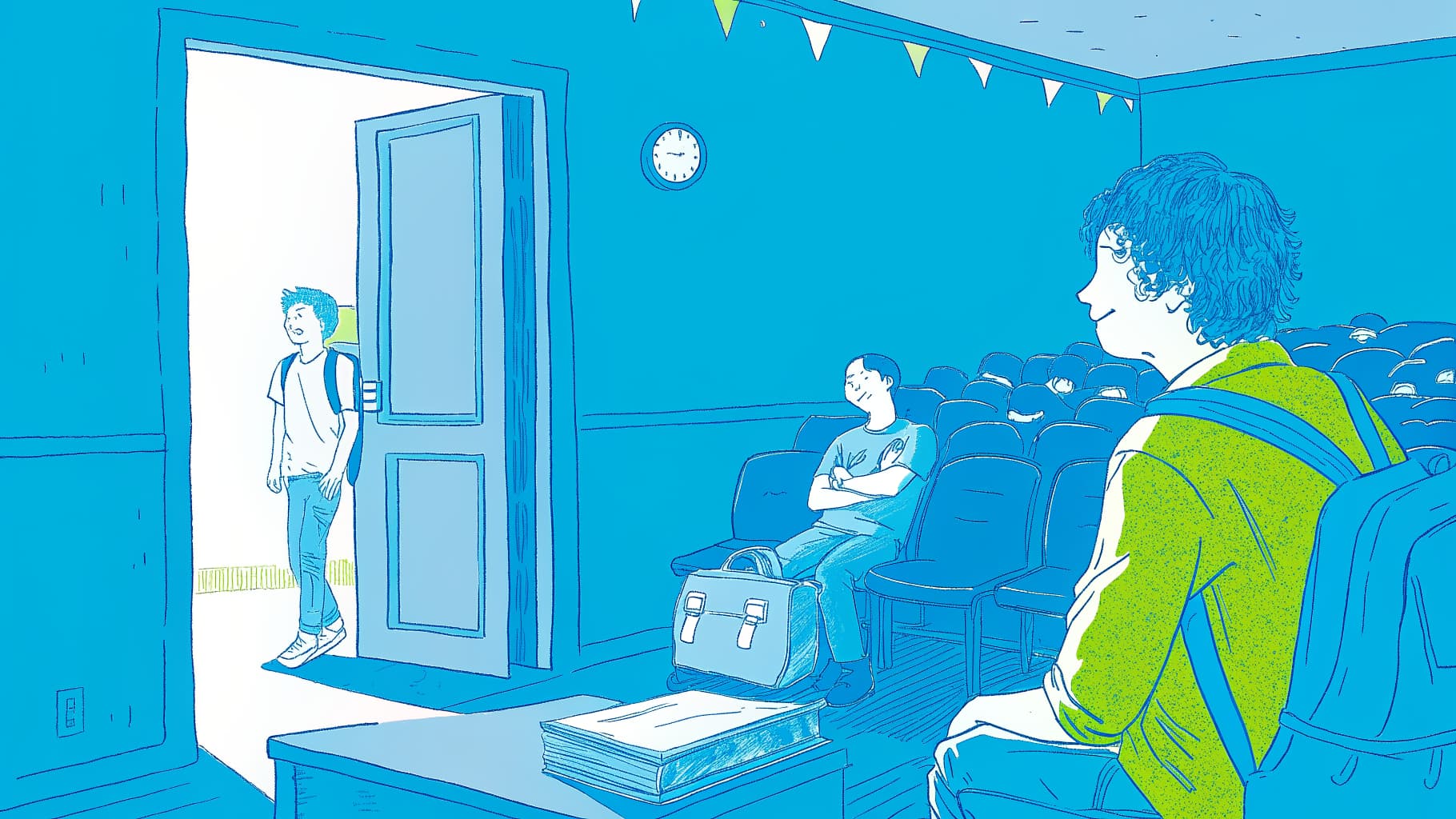
A transfer student walks into a campus where inside jokes already exist, seating arrangements in lectures are already habitual, and most people are not actively looking for new close friends. Surveys consistently show that transfer students report difficulty making friends at rates noticeably higher than their freshman peers. Industry research reflects that transfer students score lower on peer interaction and sense of belonging compared to students who entered as freshmen.
That gap is not a personality gap. It is a timing gap. Most transfer students are working adults juggling jobs, family responsibilities, and a heavier course load. Social time shrinks accordingly. It is not laziness or introversion that keeps transfer students isolated. It is a calendar that leaves almost no margin.
Research published in 2018 by University of Kansas communications professor Jeffrey Hall found that it takes roughly 50 hours of shared time to move from acquaintance to casual friend, and more than 200 hours to build a close friendship. A transfer student entering mid-year has only a single semester before summer break interrupts whatever social momentum they have built. That is why waiting for friendships to form passively is a strategy that the calendar will defeat. Transfer students who treat the first two weeks of a semester as a social sprint, not a settling-in period, are working with the timeline rather than against it.
200 hours needed to build a close friendship
Key takeaways
- Transfer students don't struggle socially because they're less likable—they arrive mid-story, after most social circles have already formed around shared dorms, freshman orientation, and early-semester proximity.
- The first week of a new semester is the lowest-friction window to meet people all year; social circles aren't locked yet, and the cost of introducing yourself is at its minimum, that window closes fast.
- One club meeting won't feel like friendship, and expecting it to is what makes transfer students quit too early; repeated exposure over multiple meetings is what actually builds connection.
- The classroom is the most underused social environment on campus: the same faces two or three times a week for sixteen weeks generates more repeated contact than most campus events ever will.
- Where you live is a social decision—transfer students who treat housing as a pure logistics call often discover their address quietly determined how many friendship opportunities they generated each day.
- A single bad course recommendation can cost a transfer student an entire admission cycle, which means every social strategy in this guide depends first on being at the right school on the right timeline.
- Transfermatic's Event Finder gives transfer students a curated feed of everything happening on campus, club meetings, transfer fairs, job fairs, orientation events, and lets them add any event to their schedule in one click, so repeated exposure stops being something you plan and starts being something you show up to.
The Mindset That Actually Works - Be Bold, Be Real, and Follow Up
Waiting to feel socially ready before putting yourself out there is one of the most expensive mistakes a transfer student can make. Many transfer students carry a quiet, corrosive belief that the door is already closed, that they missed some invisible freshman bonding window and are now too late to build real friendships. That feeling is especially sharp for students who also sense they are running behind on the academic side: wrong classes on the transcript, a semester that might not count, a pathway that suddenly feels less certain.
The semester does not pause while you settle in; friend groups form fast, and the students building those connections are doing it before the anxiety fades, not after. Research by University of Kansas communications professor Jeffrey Hall found that close friendship requires roughly 200 hours of accumulated contact. That number reframes the whole problem: confidence is not the prerequisite for connection; repeated contact is.

The transfer students who build real friendships in their first semester are not more charming than you. They simply started showing up earlier. You can read the University of Kansas's own summary of Hall's findings here.
| ✓ Pros | ✗ Cons |
|---|---|
| Starts the friendship clock in week one | Schedule (e.g., 8 a.m. to 8 p.m.) is genuinely difficult for working students |
| Room full of peers in the same mid-stream arrival situation | Often front-loaded with icebreakers and generic programming that dilutes social momentum |
| Social circles not yet fixed; activation energy to meet people is lowest | Transfer students frequently miss the events that matter due to scattered listings |
Social circles do calcify quickly. But the fix is not to wait for a confident moment that arrives on its own. Boldness is a decision you make before you feel ready, not a reward you collect after.
Walk into the club meeting. Sit next to someone new. Introduce yourself before the awkwardness has time to build a case against you.
Part of what makes this so hard for transfer students is that the hesitation is not purely social; it is structural. When you are not certain your classes are actually counting toward your target school, when you are second-guessing whether you are even at the right institution for the major you want, social boldness feels like a luxury. It is difficult to plant roots in a campus community when part of you is still wondering whether this is the right campus.
That is a real and understandable bind, not a personal failing. Eliminating that structural uncertainty is exactly what Transfermatic's personalized semester-by-semester transfer plan is built to do. By completing your intake early, ideally in the first semesters of community college, with a target school and major already in mind, you get a clear articulation-matched roadmap within minutes: which classes count, in what order, toward your specific school and major.
When you are not losing mental energy to second-guessing every course registration decision, you have more of yourself left to spend on the social work that actually builds a life at your school. The mere exposure effect shows that repeated contact is the actual engine of liking. You do not need a perfect opening line.
You need to be in the same room, more than once.
Authenticity Over Assimilation
Boldness is a decision you make before you feel ready, not a reward you collect after.
Pick people who match how you already think and talk, not groups you have to shrink yourself to join. Many transfer students feel trapped in environments that do not align with their values or identity, and the bold decision to transfer is often a necessary, if difficult, correction to that misalignment. Once you have made that move, resist the impulse to assimilate into the first social group that will have you.
Being yourself, authentic rather than performative, is what makes those early connections stick. Clubs built around a real interest you already hold mean the people you meet already share something concrete with you. The shared context does the heavy lifting so the conversation does not have to.
The Follow-Up Is Where Most Transfer Students Drop the Ball
Hall's research makes clear that a single interaction contributes almost nothing to the 200 hours required for close friendship. The follow-up, a text after class, showing up to the same club meeting next week, grabbing coffee after a study session, is what actually moves the counter. Most transfer students have good first conversations; the ones who build real friendships are the ones who create a reason to have the second one. Make a habit of following up with people you meet, even briefly, because that second touchpoint is where the friendship clock actually starts running.
The same logic applies to the academic pathway that makes all of this possible. A transfer plan you build once and never revisit drifts. Transfermatic surfaces registration deadline reminders and supports plan regeneration each semester during course selection, so the roadmap stays current as your situation changes.
When the logistical noise stays managed in the background, showing up, to class, to the club, to the follow-up coffee, gets a little easier every time.
Using Campus Events and Orientation Week Before Social Windows Close
The first week of a new semester has a shelf life most transfer students don't see coming. Social circles aren't fixed yet, people are still introducing themselves, and the activation energy required to meet someone new is at its lowest point all year. That window doesn't stay open. Peer networks begin solidifying early in a semester, after which breaking into existing groups requires significantly more effort. What you do in those early days compounds in ways that showing up to a random event in week nine simply cannot replicate.
Transfer Orientation - Your Freshman Move-In Day, It Expires in 72 Hours
Transfer orientation is the structural equivalent of freshman move-in day, and it closes fast. The difference is that freshmen know move-in day matters. Transfer students often treat orientation as a bureaucratic checklist, something to survive between housing paperwork and syllabus week.
That framing is expensive. Transfer students who engage with campus programming in their first semester report measurably stronger sense of belonging by year's end compared to those who delay involvement. There's a real cost to skipping or delaying orientation that goes beyond social awkwardness: transfer students who miss those first campus visits often lose their best window to assess whether a school's environment actually fits them before they're locked into a housing contract or a full semester of enrollment.
By the time the picture becomes clear, the exit is expensive. Orientation is not where deep friendships form. It is where the hour-count starts, and it takes well over a hundred accumulated hours of shared time to move from acquaintance to close friend.
Starting that clock in week one versus week four is not a small difference. One honest trade-off worth naming: orientation days are frequently designed in ways that create real friction.
A structure like the one NYU's College of Arts & Science lays out for transfer students is genuinely difficult to justify for a transfer student who is also holding down a job. That friction is legitimate, not a character flaw.
Many transfer students also arrive expecting meaningful peer connection and instead find the day front-loaded with icebreakers and generic programming that dilutes whatever social momentum the room might otherwise generate. Both complaints are valid. Go anyway. Attend orientation events, get out of your room, and spend time in public campus spaces where those early introductions can actually happen.
The value is not the icebreakers or the campus tour. The value is the room full of people who are all in the same mid-stream arrival situation you are, and the clock that starts ticking the moment you introduce yourself to someone.
GBO Week, Transfer Fairs, and Club Recruitment Nights as One Sprint
The opening weeks of a semester typically stack several high-leverage events close together: general body orientation programming, transfer-specific welcome events, club recruitment fairs, and department mixers. Treat these as a single coordinated sprint rather than separate optional items. A transfer student who attends a transfer fair, one club recruitment night, and a transfer center welcome event in week one has created multiple distinct social touchpoints before the semester finds its rhythm.
UC Berkeley's Transfer Student Center, for example, hosts transfer-only welcome events in the first two weeks specifically because early, concentrated exposure supports stronger connection. You do not need to attend everything. You need to attend enough, consistently enough that faces start to repeat.
A particular note for transfer students who live off campus: the students who feel most disconnected from campus culture are almost always those who commute in for class and commute back out before the informal post-class moments happen. The sprint model matters more for you, not less, because those concentrated early-semester events are among the few structural opportunities you have to build campus presence before the rhythms calcify.
The Scattered-Listings Problem - Why Transfers Miss the Events That Matter
Most transfer students do not skip campus events because they are antisocial. They skip them because the events are scattered across a department website, a student affairs calendar, and a handful of club Instagram pages that nobody told them to follow. Solving the discovery problem, knowing when and where the high-leverage early-semester events are, matters as much as the intention to attend.
This same fragmentation problem runs upstream, into the planning decisions that precede orientation entirely. Transfer students navigating articulation requirements, registration deadlines, and course selection across multiple semesters are doing it from a dozen disconnected sources simultaneously, and the students who come into orientation having already mapped their academic path tend to move through the logistical noise faster and invest more of their attention in the social layer that actually builds belonging. Transfermatic is built specifically to consolidate that upstream work.
A personalized semester-by-semester transfer plan, articulation requirement matching, registration deadline reminders, and RateMyProfessor integration all live in one place, generated within minutes of a student completing setup. The goal is that by the time orientation arrives, the academic logistics are already handled, and the student's full attention is available for the part of the first week that actually compounds: the people in the room.
Join Student Clubs and Organizations - Find Your People Through Shared Interests
Clubs get recommended to every transfer student, and most transfer students try them once. They walk in, stand near the snacks, make polite conversation with two strangers, and leave feeling like it didn't click. Then they quietly stop going and conclude that clubs just aren't for them.
The real problem isn't the club. It's the expectation that one meeting should feel like friendship. One pattern we see repeatedly among transfer students, especially those in the early semesters of community college who already have a target school or major in mind, is a late-semester crisis: they realize they never joined anything, and suddenly worry it will hurt their internship or job prospects.
That fear is legitimate, but it usually arrives too late to fix. The students who avoid it aren't more social by nature; they simply started earlier and stayed consistent.
Why Clubs Are Really Exposure Machines, Not Social Events
Joining student clubs and organizations works best when you treat them as recurring exposure engines, not one-time social events. Psychologist Robert Zajonc's mere exposure research found that repeated, low-stakes contact with the same people measurably increases how much we like them, even when nothing dramatic happens between interactions. The friendship isn't in the first meeting.
It's in the fifth, sixth, and seventh, when your face becomes familiar and small talk graduates into something real. A transfer student who joins a weekly hiking club meets the same group of people every Saturday; after enough repetitions, asking one of them to grab lunch feels completely natural, not forced. Research published in PMC on adult friendship formation confirms that repeated proximity plus shared activity are the two structural prerequisites for new friendships to form.
Clubs collapse both into a single weekly commitment, which is why they outperform random social environments like dining halls or campus lawns where you see different faces every time.
Pick Clubs You'd Join Even If You Made Zero Friends
Finding community through shared interests is not just feel-good advice. It's a strategic filter. When a club is organized around something you genuinely care about, perceived similarity with the other members is already built in before you say a word.
That matters because perceived similarity is one of the strongest predictors of whether two people move past small talk, according to the same PMC friendship research. A struggle we see early in the transfer journey is students joining clubs primarily for résumé optics, for the internship line, the career fair conversation, the counselor's approval, rather than genuine interest. That transactional mindset produces exactly the surface-level relationships they were hoping to escape.
Transactional attendance reads as transactional, and the connections stay shallow. The science reinforces what most students already sense: choose something you'd show up for even on a week when you're tired. A related frustration hits students whose specific passion, say, environmental sustainability, doesn't map neatly onto a club name in the directory.
The hiking club and the camping club exist, but neither calls itself what you care about. That mismatch shouldn't be a dealbreaker. The PMC research on friendship formation makes clear that shared activity is the structural ingredient, not shared labels.
A student who loves environmental sustainability and joins an outdoor hiking club is standing in the same room as people who value the natural world; the perceived similarity is already there. The club name is less important than the recurring contact it creates.
Find Your Club Before Day One
Social media and Discord servers let you make first contact before the semester starts, which is a significant edge. To get started, consider these approaches:
- Search the club directory or a university's social channels before move-in week, then DM a club president, introduce yourself, and show up to the first meeting already knowing one person's name.
- Use social media to connect with classmates or join university groups online before the semester begins.
- Look for sports teams, intramurals, or volunteer opportunities that fit your schedule and interests, any recurring group activity creates the same proximity and shared-interest conditions that make friendships form.
That single data point, knowing one person's name before you walk in, changes the entire dynamic of entering a room of strangers.
Most transfer students intend to do this but lose the window in the chaos of a new campus. This is where having a structured plan, one built at the start of your community college journey and revisited each semester, pays off beyond academics. Transfermatic's personalized semester-by-semester transfer plan gives students, and optionally a parent or counselor reviewing the plan alongside them, a centralized view of what needs to happen each term.
Registration deadline reminders mean the early-semester club recruitment windows don't get buried under course selection stress. When your academic obligations are organized in one place, articulation requirement matching, automatic schedule creation, registration deadlines, the mental bandwidth to act on social opportunities like club sign-ups actually exists. Students who use Transfermatic most effectively are those in the early semesters of community college with a target school or major already in mind; that clarity lets the plan do its job, academic and social logistics alike.
The students who look back with regret aren't the ones who tried clubs and didn't click. They're the ones who kept meaning to start and ran out of semesters. Starting earlier, with a clearer plan, is the only real fix.
Meeting People in Classes - Study Groups, Small Talk, and Showing Up Visible
The classroom is the most reliable social environment on campus, and most transfer students treat it like a waiting room. The same faces, twice or three times a week, for sixteen weeks: that is more repeated contact than most clubs or campus events will ever generate. According to the American Survey Center's 2021 research, more than one-third of college graduates met at least one of their closest friends in college, with shared academic environments identified as the primary structural scaffolding for those bonds.
What makes this harder for transfer students is the starting position. You are arriving after the first year, the year when dorm hallways, orientation week, and early introductory courses quietly assembled most of the friend groups that are already intact by the time you walk in. That is not a personal failure; it is a structural disadvantage.
The transfer students we work with describe the same fear: not just being new, but feeling like everyone else already has their people, and that you are starting from zero. The classroom is where you close that gap, but only if you show up with intention.
Arrive Two Minutes Early, Leave Two Minutes Late
"Older transfer students with only online classes face a structural barrier to meeting people, since there's no in-person classroom environment to naturally start small talk or form study groups."
Those windows are low-pressure, naturally brief, and give both people an exit (class starts, class ended). A simple opener like "Are you also in the Thursday discussion section?" costs nothing and creates a reason to exchange numbers. Reaching out to classmates before or after class is one of the most underused tools transfer students have.
The academic context does the heavy lifting; you are not manufacturing small talk, you are solving a shared logistical question. One structural note: transfer students who completed much of their community college coursework online face a real barrier here. When there is no in-person classroom environment, there is no two-minute window before the lecture, no hallway after the exam.
If your early community college semesters were fully remote, the in-person classroom at your transfer institution may feel unfamiliar as a social space, and that is worth naming, because the fix is intentional, not automatic. Getting into in-person sections where possible, and treating the pre- and post-class window as a non-negotiable habit, is how you rebuild that structure from scratch.
Study Groups as a Low-Pressure On-Ramp
Forming study groups works because the shared goal removes the social pressure entirely. You are not there to make friends; you are there to pass an exam. The friendship is a byproduct of two hours of side-by-side problem-solving. A group chat for a shared assignment becomes the seed of something real, because everyone already has a reason to keep talking after the session ends. The limitation worth naming: study groups only form around courses where the workload actually demands collaboration, so they are most effective in STEM, writing-heavy, or lab-based classes.
Speak Up in Class Discussions
Participating in class discussions makes you visible to peers in a way that sitting quietly never will. Becoming a voice in the room transforms you from a seat number into a person, and classmates who agree with your point, or respectfully push back, are already halfway to a real conversation. Transfer students who describe feeling invisible in class almost always report the same turning point: the day they spoke up and someone nodded, then found them afterward.
One comment per session is enough. Repeated exposure to the same peers, the compounding effect the American Survey Center's research points to as the structural scaffolding of lasting college friendships, only happens when your course sequence keeps you moving through the same academic track as the people around you. If your sequence drifts because of a planning error, you get reshuffled into mismatched sections and lose the peer-exposure loops that would have compounded into friendships.
The social cost of a bad academic plan is invisible until it is not. This is where academic planning and social momentum are more connected than they look. Transfermatic builds students a personalized, semester-by-semester transfer plan, the fastest viable path from their community college to their target school for their major, with no wasted classes.
The goal is that a student knows they are in the right classes, in the right order, so the course sequence stays coherent across semesters instead of splintering. That coherence is what keeps you in the same rooms as the same people long enough for something real to form. A single misaligned course, the kind that a clear, verified plan prevents, is among the most common reasons students delay transfer and, quietly, one of the most common reasons the social traction they were building resets before it could take hold.
Related Reading
- Transferring From Community College To University
- Community College Transfer Mistakes
- Transfer Articulation
- Is Community College Free In California
- When Is It Too Late To Transfer Colleges
- Do Community College Credits Expire
Community and Residential Living - Why Where You Sleep Shapes Who You Meet
Where you sleep is a social decision, not just a financial one. Transfer students who treat housing as a pure logistics problem (price, commute, parking) often discover too late that their address quietly determined how many friendship opportunities they generated every single day without trying.
Dorm-Style and Transfer Housing Create Passive Exposure You Can't Replicate Anywhere Else
On-campus housing doesn't just provide a place to sleep; it replicates the single social condition that friendship science identifies as most powerful: high-frequency, low-effort proximity. Because college is a "socially porous" environment where shared context lowers the activation energy for new relationships, housing selection is a social strategy decision, not just a logistical one. A transfer student in a traditional residence hall or dorm encounters a meaningful number of new peers on their floor in the first week without attending a single event.
The hallway does the work. The American Survey Center's 2021 research identifies repeated proximity in shared physical environments, dorms, dining halls, communal kitchens, as the core mechanism through which college friendships form. Psychologists call this the mere exposure effect: seeing the same face at the mailbox or microwave repeatedly, over weeks, is enough to lower the social activation energy required to start a real conversation.
You don't manufacture those moments in an off-campus studio apartment. One concern worth naming directly: many transfer students, particularly those arriving at 22, 24, or 26, worry about feeling out of place in housing dominated by 18-to-20-year-old residents. That discomfort is real, and it's worth weighing.
But it's also worth weighing the alternative: an off-campus apartment removes the passive social infrastructure entirely, and the research is clear that proximity, not age parity, is the primary driver of early friendship formation. A slightly awkward floor dynamic is recoverable. A semester of social isolation is much harder to reverse.
Transfer-Specific Housing Is the Highest-Density Version of Shared Context
Transfer housing concentrates the one ingredient friendship science says matters most: everyone there is in the same situation. No one has existing friends on the floor. No one arrived with a ready-made social circle.
The shared context, same mid-semester arrival, same disorientation, same pressure, drops the cost of a first conversation to nearly zero. Transfer students who live on campus effectively borrow the social infrastructure that freshmen used to build their existing groups. Transfer housing reinstates that structural condition.
That shared disorientation extends beyond housing, of course. Transfer students navigating course equivalencies, articulation requirements, and registration deadlines are carrying a cognitive load that freshmen simply don't face. Transfermatic's Transfer Roadmap Planning addresses exactly that layer, producing a personalized semester-by-semester transfer plan, with Articulation Requirement Matching that figures out which community college courses will count toward your intended major at your target university, so you're not wasting time or money on classes that don't transfer.
When that academic uncertainty is resolved early, students arrive at their new campus, and their new floor, with one fewer source of anxiety pulling their attention inward.
Co-Ops and Shared Student Housing Replicate the Effect
If on-campus housing is unavailable, co-ops and shared student houses replicate the passive-exposure loop through shared kitchens, common spaces, and communal schedules. Research on positive housing attitudes in college supports the same underlying logic: environments that generate routine, low-stakes interaction between residents produce the conditions for relationship formation that isolated apartment living cannot. Most transfer students who end up in apartment-style housing don't realize they've quietly opted out of passive social infrastructure until the semester's rhythm has already set. The American Survey Center's research identifies on-campus proximity as the primary structural condition for college friendship formation, which off-campus apartment living removes by default.
The broader lesson is that transfer success, social and academic, is almost always a planning problem before it's an execution problem. Students who arrive knowing exactly which courses count, which deadlines to hit, and which housing environments are most likely to generate connection are starting from a structurally different position than those who improvise. Transfermatic's tools are most beneficial when a student is in the early semesters of community college with a target school or major in mind, precisely the window when these housing and course decisions are still open, not already locked in.
The Hidden Threat to Your Social Life - Arriving at the Wrong University a Year Late
Picking the right clubs, showing up to orientation, and introducing yourself in class, all of that matters. But every tactic in this guide rests on a precondition most transfer students never think to check: that their course plan actually gets them to their target university on time.
One Bad Course Recommendation Can Cost You an Entire Admission Cycle
A single unverified course recommendation can quietly collapse a transfer timeline months before a student realizes anything is wrong. The scenario is more common than it sounds: a student takes what they believe is an approved prerequisite, only to discover in their final semester that the articulation agreement changed, or that the course satisfied a different requirement at a different school entirely. The fix requires one more term.
That means missing the admission cycle by a full year, and, for families footing the bill, it means paying for courses that do not count toward the transfer degree. This is one of the sharpest anxieties transfer students and their parents carry: the fear that a year's worth of tuition and effort quietly evaporates because one class was taken on bad advice. It is not an irrational fear.
It happens regularly, and it happens to diligent students who asked questions and followed the guidance they were given.
Why Fragmented Advice Creates Invisible Plan Errors
The root cause is rarely carelessness. Transfer planning pulls from multiple sources at once:
- A counselor managing hundreds of students
- An articulation database that is genuinely difficult to interpret without expertise
- University websites that do not always reflect current agreements
A student can receive conflicting credit-load guidance from two sources on the same day and have no way to know which is right.
College Board's BigFuture notes that transferring to a four-year university requires careful planning precisely because the consequences of skipping that step are delayed and hard to reverse. The students we work with at Transfermatic describe a specific kind of dread: not knowing whether a course on their list is actually verified to transfer to their specific target school for their specific major. Deciding between multiple target universities or majors while trying to compare course equivalencies across different articulation agreements, without a single authoritative source, is where invisible errors take root.
Your Social Life Starts With Getting to the Right Campus on Time
Transfermatic's Transfer Roadmap Planning is built to close exactly that gap. Within minutes of completing an intake, students receive a personalized semester-by-semester transfer plan built around their exact community college, target university, and intended major. Articulation Requirement Matching surfaces course equivalencies so that students deciding between multiple schools or majors can compare requirements side by side before committing.
Registration deadline reminders and plan regeneration mean the roadmap stays accurate each semester during course selection, not just on day one. The plan is most valuable when a student is in the early semesters of community college and has a target school or major in mind, because that is when the cost of a wrong course is still recoverable. But it is equally critical for students approaching their target transfer date who cannot afford to discover a planning error at the finish line.
The goal is a faster, cleaner transfer path to a top university, one where every course on the list is verified, every hidden prerequisite is surfaced, and finishing transfer requirements in two years is a plan rather than a hope.
Next steps
If your transfer social life keeps stalling before it starts, the path forward begins with fixing the precondition underneath every tactic in this guide: a verified, semester-by-semester course plan that actually gets you to your target campus on time. Start with our best transfer planner for community college students.
The research on friendship formation is clear that close bonds require 200-plus hours of accumulated contact, which means every semester you spend reshuffled into mismatched course sequences because of a planning error is a semester where the peer-exposure loops that build real friendships never get to compound. Clubs, study groups, and orientation week all depend on you arriving at the right school, in the right cohort, on schedule. A course plan error that costs one admission cycle doesn't just delay your degree; it resets every social touchpoint you had been building toward.
Start with Transfermatic. Complete the intake with your current community college, target university, and intended major, and get a personalized roadmap that matches articulation requirements to your specific path, so the courses on your transcript count before you walk into your first orientation, your first club meeting, or your first class.
Frequently Asked Questions
Is it actually harder to make friends as a transfer student, or is that just in my head?
It is genuinely harder, but the reason is structural, not personal. The social architecture of a university is largely set within the first semester, so transfer students arrive after friend groups have already formed, inside jokes already exist, and most students are not actively looking for new close friends, a timing gap, not a personality gap.
How long does it actually take to make a close friend in college?
Research by University of Kansas communications professor Jeffrey Hall found that it takes roughly 50 hours of shared time to move from acquaintance to casual friend, and more than 200 hours to build a close friendship. That means a single good conversation contributes almost nothing, repeated contact and consistent follow-up are what actually move the counter.
I keep going to club meetings but it never feels like it's clicking, am I doing something wrong?
One meeting is not supposed to feel like friendship. Psychologist Robert Zajonc's mere exposure research found that repeated, low-stakes contact with the same people measurably increases how much we like them, even when nothing dramatic happens between interactions. The friendship is not in the first meeting, it is in the fifth, sixth, and seventh, when your face becomes familiar and small talk graduates into something real.
I commute to campus, does any of this social advice even apply to me?
It applies to you more, not less. Students who commute in for class and leave before informal post-class moments happen are among those who feel most disconnected from campus culture. The concentrated early-semester events, transfer fairs, club recruitment nights, transfer center welcome events, are among the few structural opportunities commuters have to build campus presence before social rhythms calcify, so treating those first weeks as a sprint matters especially for you.
I'm anxious about whether my classes are even counting toward my transfer goal, how is that affecting my social life?
That structural uncertainty has a real social cost. When you are losing mental energy to second-guessing every course registration decision, you have less of yourself available for the social work that actually builds a life at your school. Eliminating that uncertainty, by having a clear, articulation-matched roadmap that shows which classes count toward your specific school and major, is what frees up the attention and confidence needed to actually show up socially.